Launch offer — valid today only

📄 Digital book in PDF · read it on your phone or print it

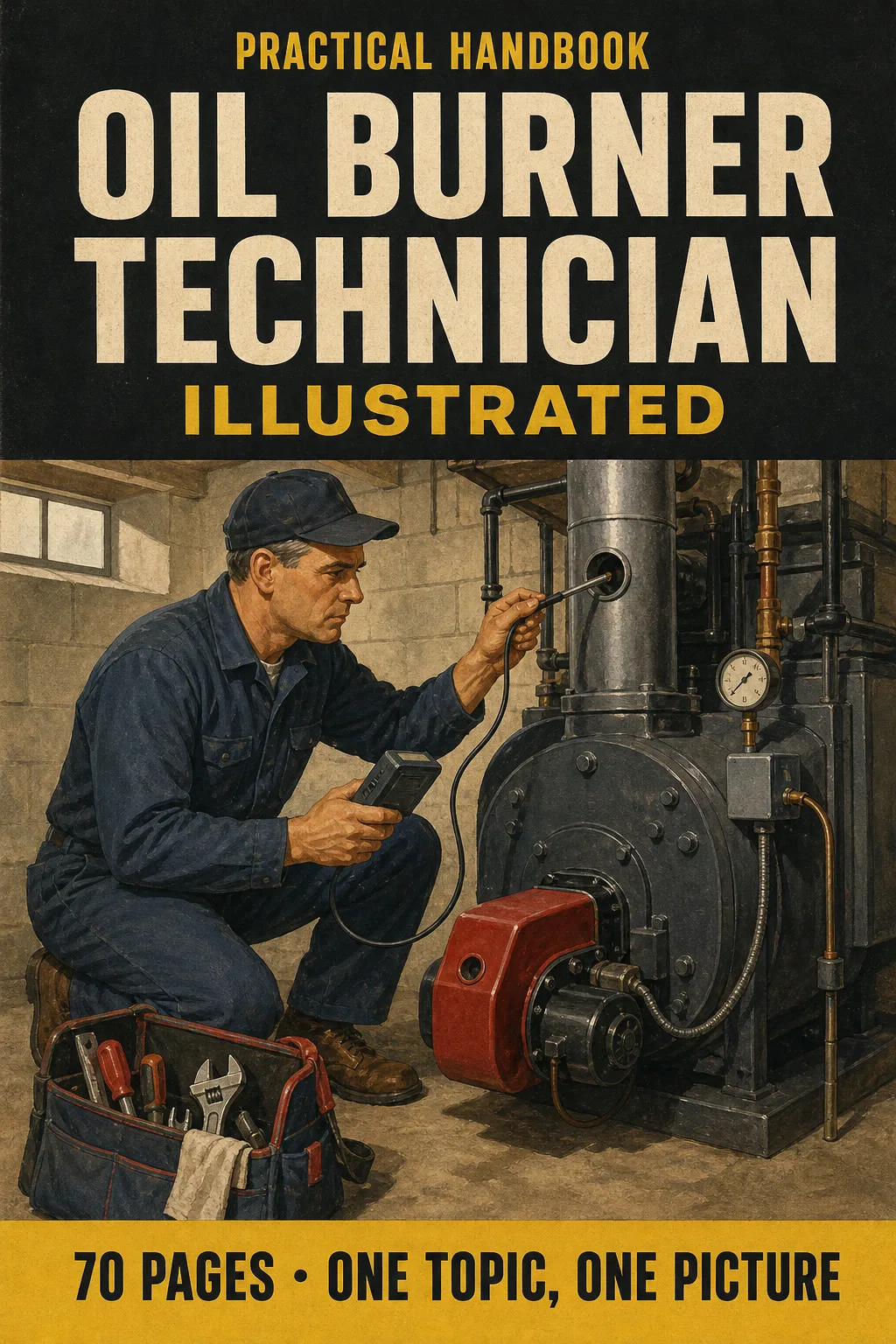
Residential Oil Heat and the Oil Burner License, All in Drawings Set Up, Test and Troubleshoot in the Same Order Every Time

For techs who already do the work and need the state license or NORA certification. Tank, pump, nozzles, cad cell, aquastats, draft, combustion testing and no-heat calls: one topic per page, the drawing first, then the numbers to remember. 70 illustrated pages.

START STUDYING THIS WAY

🔒 Secure checkout · PDF by email · 30-day guarantee

Every topic, its own pageEvery burner part and every test drawn, with the explanation right beside it
70 illustrated pages9 parts, from the tank-to-chimney path to the night-before review map
Up-to-date sourcesChecked against NFPA 31, the NORA curriculum and Massachusetts, Maine and Connecticut licensing rules
PDF by emailFormat

Look Inside the Book

Every page has one big drawing and a box with the numbers and steps you need to know:

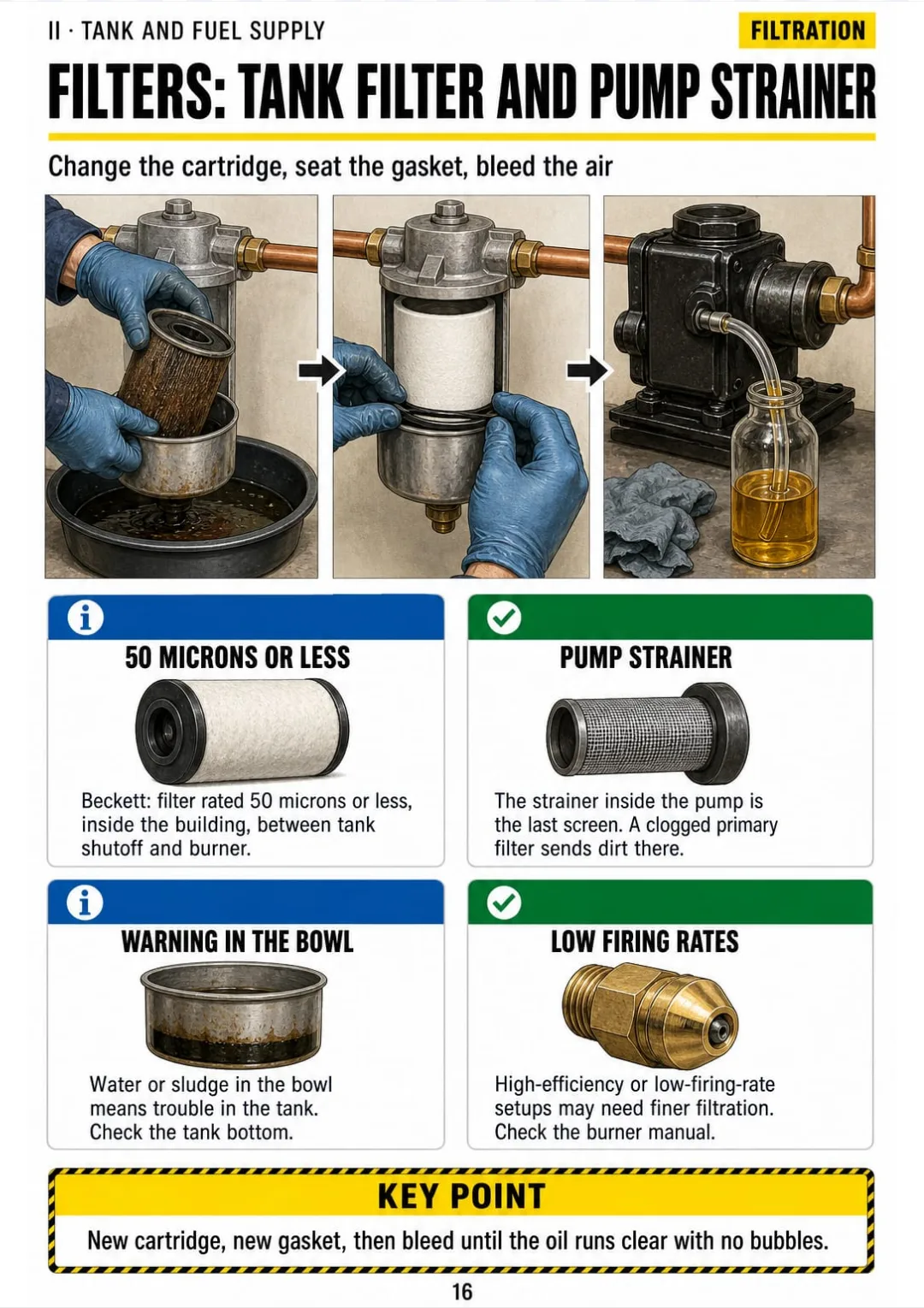
Filter of 50 microns or less, new gasket every change, then bleed the air out.
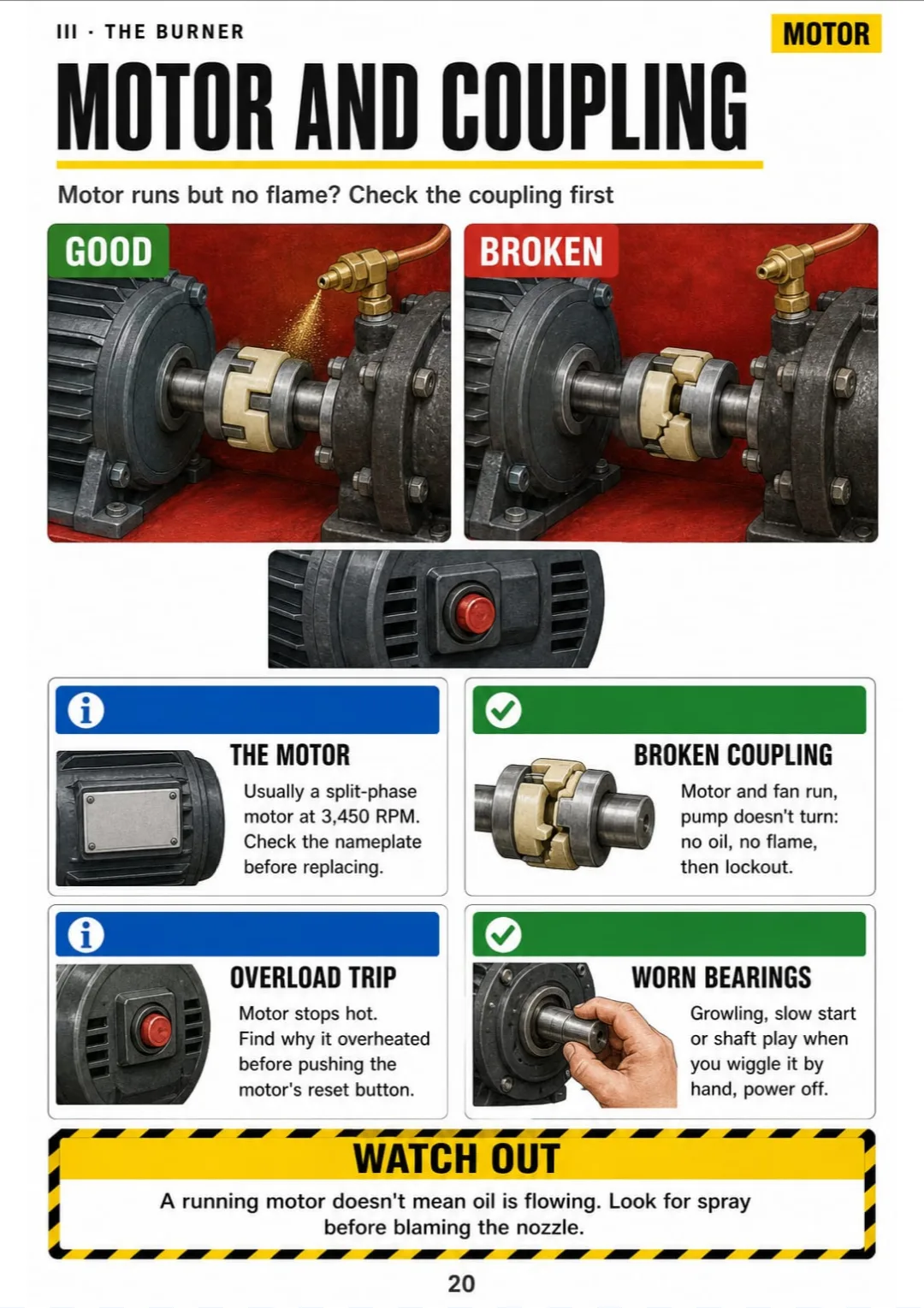
Motor runs, no flame: a split coupling stops the pump while the fan keeps turning.
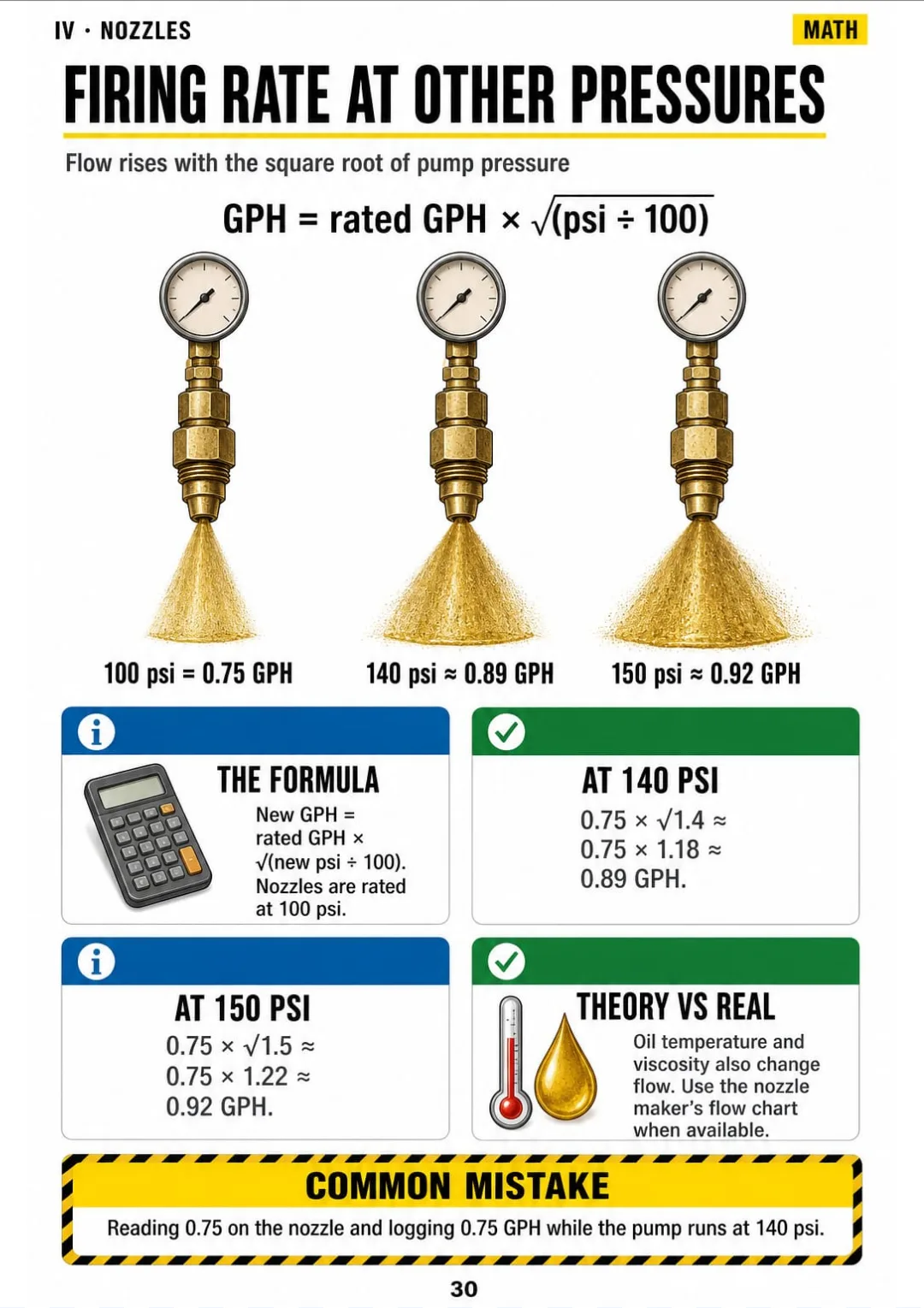
0.75 GPH at 100 psi → about 0.89 GPH at 140 psi (square-root rule)
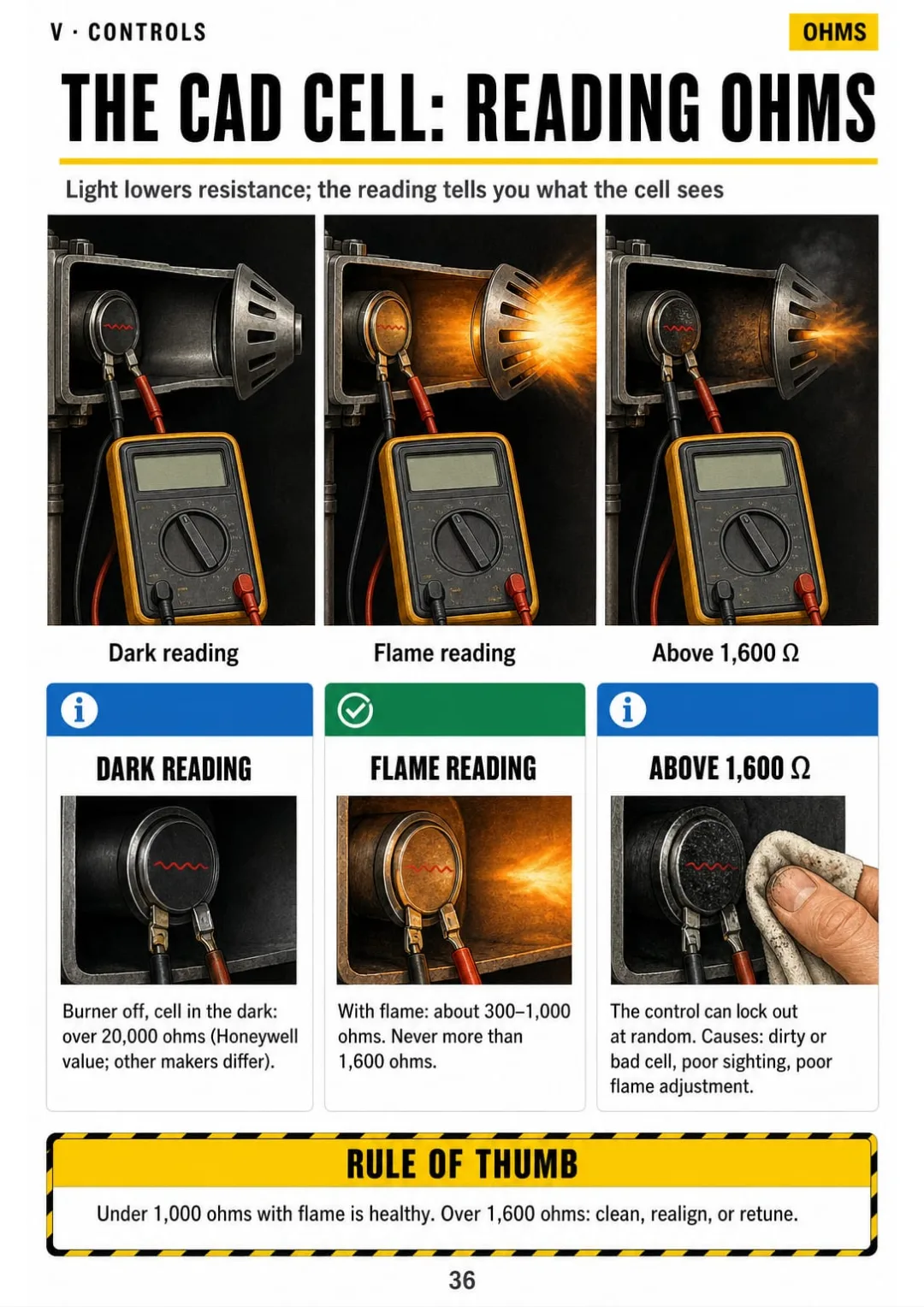
Cad cell: over 20,000 Ω dark, 300–1,000 Ω with flame, never above 1,600 Ω.
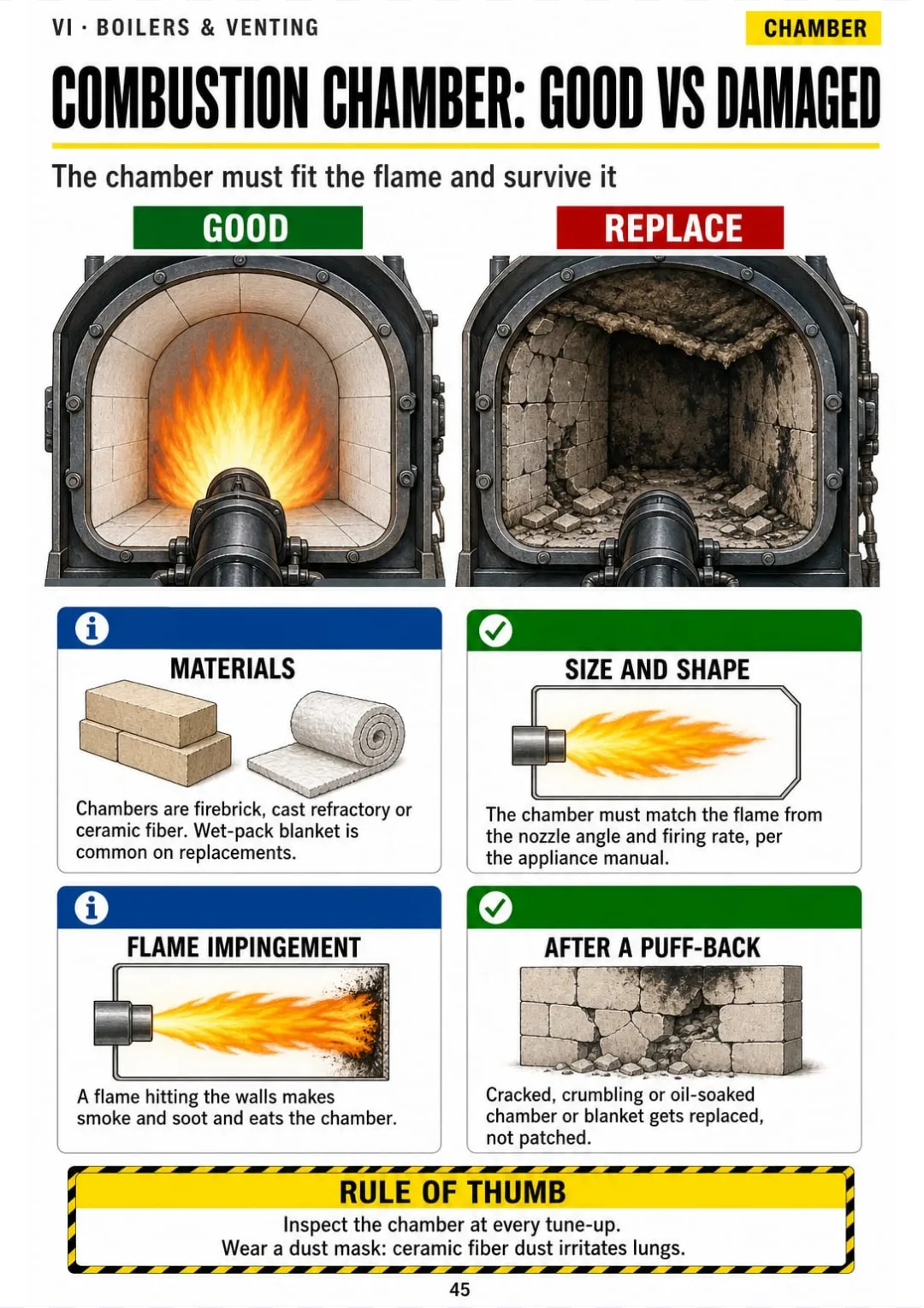
Firebrick or ceramic fiber; oil-soaked or cracked after a puff-back means replace.
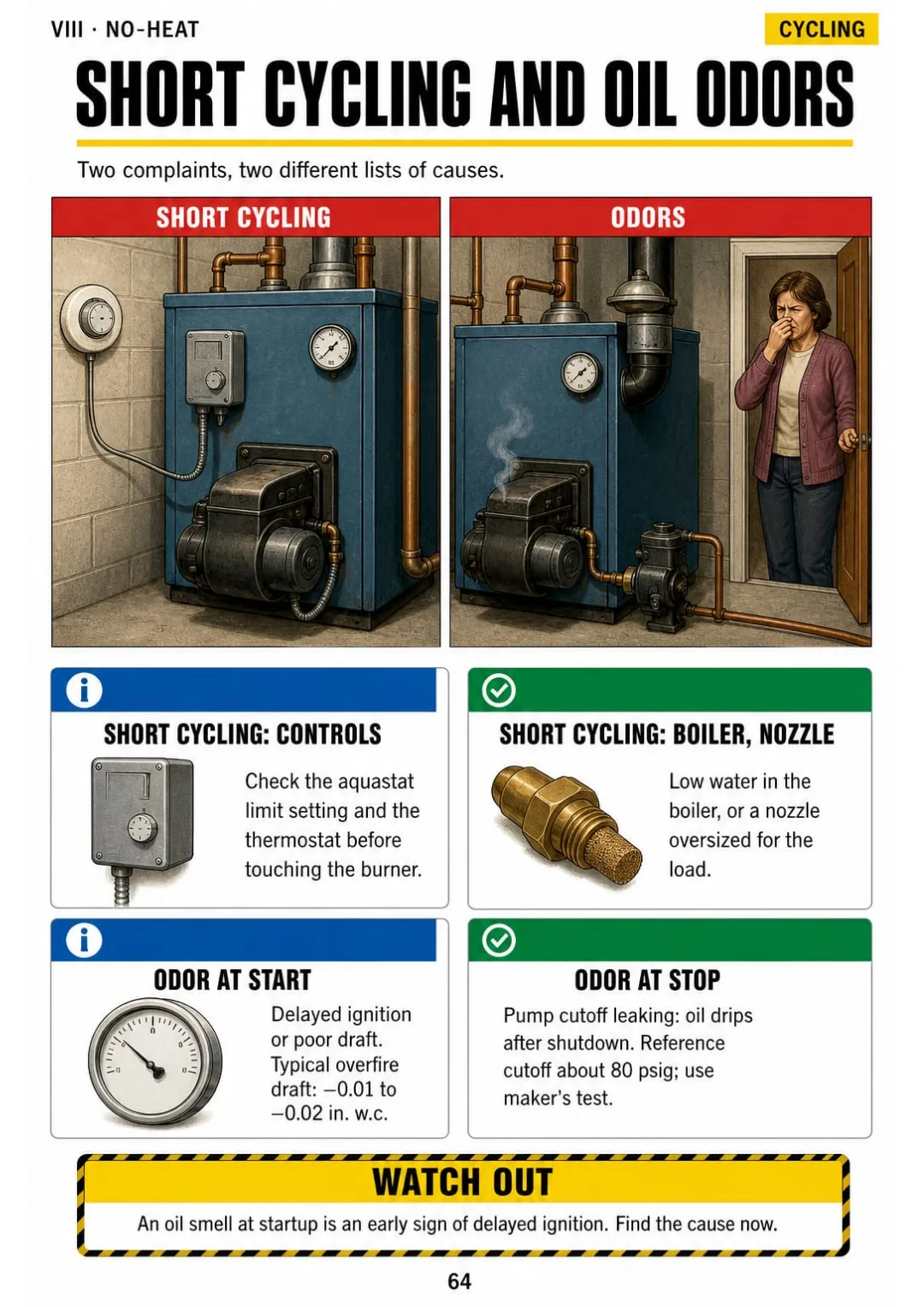
Short cycling: limit, low water, nozzle, thermostat. Odors: ignition, cutoff, draft.
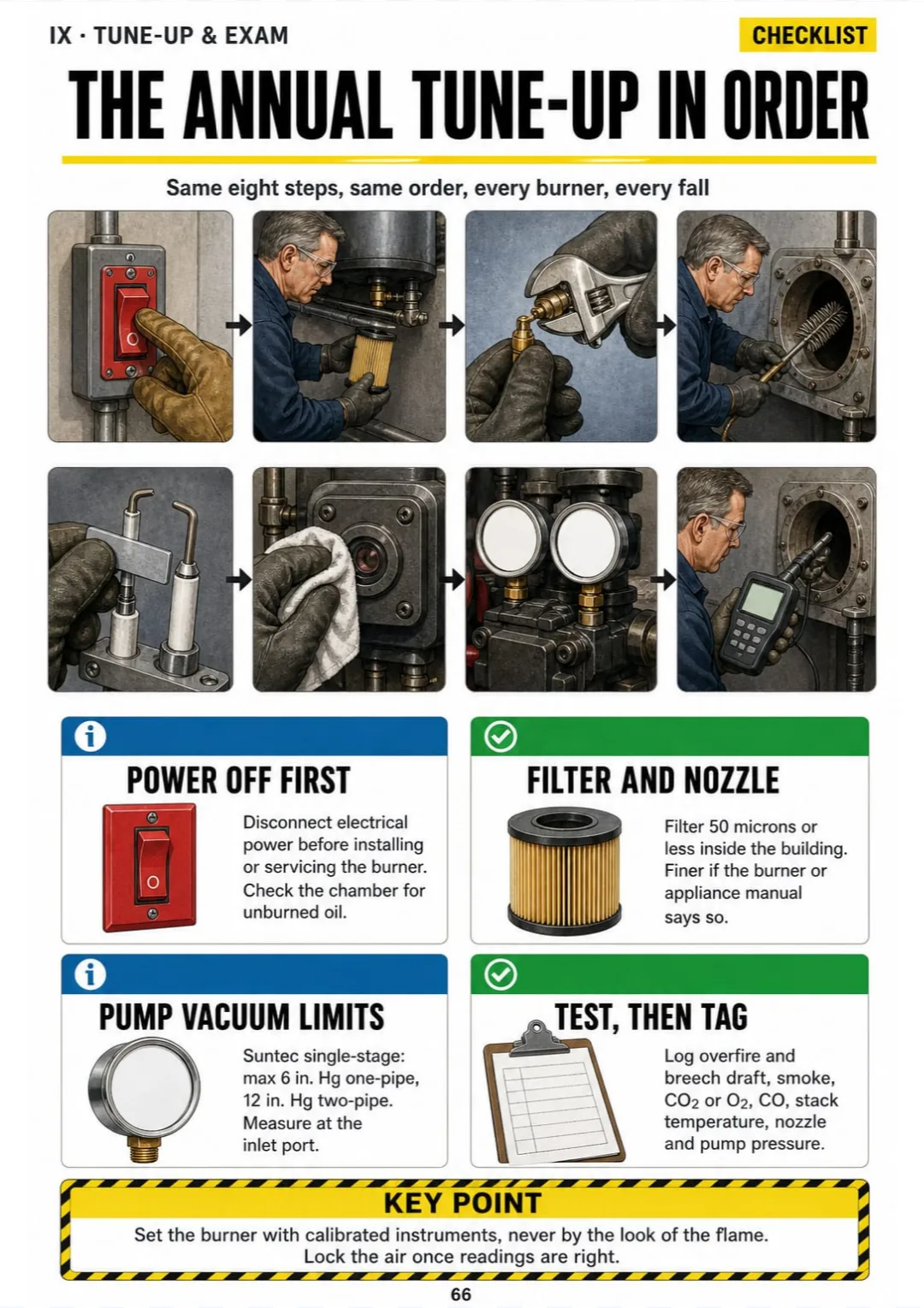
8-step tune-up checklist: power off, filter, nozzle, clean, electrodes, cad cell, pump, combustion test.
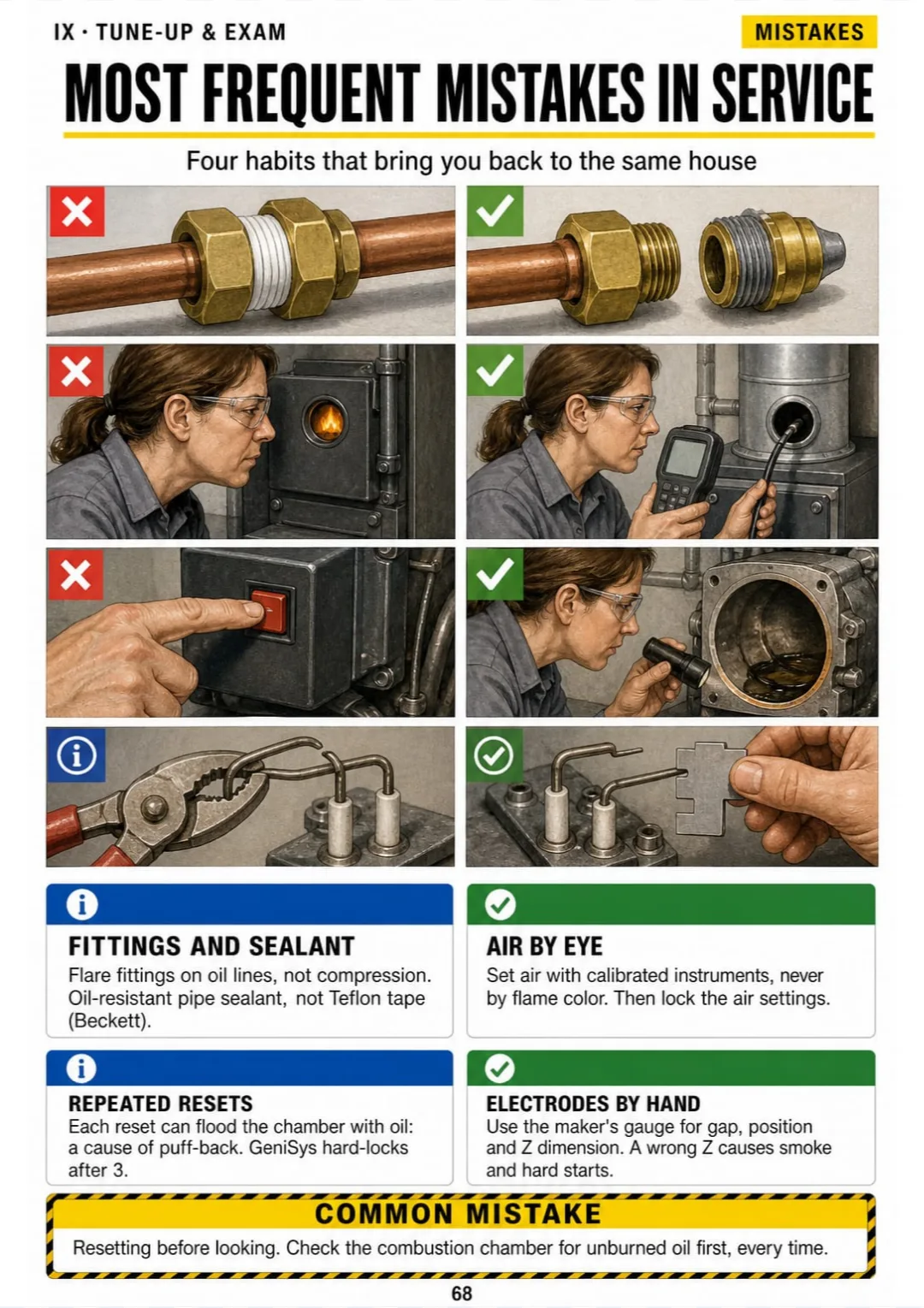
Wrong vs right: fittings, air setting, resets and electrode gauge, side by side.

Swipe to see more →

These are real pages from the book. The table of contents is the full one: 9 parts and 66 topics.

The Problem Isn't You. It's How It Was Explained to You.

You're looking at a nozzle stamped 0.75 GPH, and the pump on this burner is set to 140 psi. The question sounds simple: how much oil is it really firing?

The manual has the answer in the middle of a paragraph about pressure, flow and square roots. You read it at night after work, and by morning it's gone.

0.75 GPH at 100 psi → about 0.89 GPH at 140 psi (square-root rule)

In this book, that same nozzle is a drawing: 0.75 GPH at 100 psi on one side, about 0.89 GPH at 140 psi on the other, and the square-root rule in a box between them. One look and you see why more pressure means more oil.

Pump pressure and the cutoff test, electrode gap, the cad cell readings, overfire draft and the smoke spot each get their own page too.

You work out the firing rate yourself and set up the burner without going back to the manual.

COMPARE FOR YOURSELF

Same Topic, Two Ways to Study It

THIS
  • The manual: line after line of text
  • Burner parts explained only in words
  • You walk into the exam still unsure
The high-pressure gun-type burner consists of an electric motor which, by means of a flexible coupling, drives both the fuel unit and the blower wheel mounted on a common shaft. The fuel unit draws oil from the supply line through a strainer and delivers it at regulated pressure to the nozzle assembly located within the air tube, where atomization occurs. Combustion air supplied by the blower is regulated by the air band and shutter, while ignition is provided by electrodes energized by a transformer or igniter under supervision of the primary control.
FOR THIS
  • The whole gun-type burner in one drawing
  • Each part's job in a box
  • You see it and you get it
Motor runs, no flame: a split coupling stops the pump while the fan keeps turning.
CONTENTS

Take a Look at the 9 Parts and 66 Topics

The whole system as one path: tank and fuel supply, the burner part by part, nozzles and firing rate, controls and electricity, boilers, furnaces and venting, combustion testing by the numbers, no-heat troubleshooting, and the tune-up and exam prep. 70 pages, all illustrated.

IThe Whole System as One Path · pp. 5-10
  1. From Tank to Chimney in One Drawing
  2. What #2 Heating Oil Really Is
  3. The Fire Triangle Inside a Burner
  4. Complete vs Incomplete Combustion
  5. Your License: State Exam vs NORA
  6. Safety Before You Touch Anything
IITank and Fuel Supply · pp. 11-18
  1. Indoor Tanks: The 275-Gallon Basics
  2. Outdoor and Buried Tanks
  3. Fill Pipe and Vent Pipe
  4. Fuel Lines: Copper, Sleeves and Protection
  5. Fire-Safety Valves on the Line
  6. Filters: Tank Filter and Pump Strainer
  7. One-Pipe vs Two-Pipe Systems
  8. Lift, Vacuum and Air Leaks
IIIThe Burner, Part by Part · pp. 19-27
  1. The Gun-Type Burner Opened Up
  2. Motor and Coupling
  3. The Fuel Pump and Its Pressure
  4. Pump Pressure and Cutoff Test
  5. Fan, Air Band and Air Shutter
  6. Flame Retention Head
  7. Electrodes: Gap, Ahead, Above
  8. Transformer vs Solid-State Igniter
  9. Delayed Valve and Pre/Post-Purge
IVNozzles and Firing Rate · pp. 28-33
  1. Reading a Nozzle
  2. Spray Patterns and Angles
  3. Firing Rate at Other Pressures
  4. Sizing the Nozzle to the Load
  5. Changing a Nozzle the Right Way
  6. Nozzle Line Preheaters and Cold Oil
VControls and Electricity · pp. 34-41
  1. Line Voltage vs Low Voltage
  2. The Primary Control's Job
  3. The Cad Cell: Reading Ohms
  4. Resetting a Lockout Safely
  5. Thermostat and the Call for Heat
  6. Aquastat: High Limit, Low Limit, Differential
  7. Fan and Limit Control on Furnaces
  8. Reading a Wiring Diagram
VIBoilers, Furnaces and Venting · pp. 42-49
  1. Hot-Water Boiler Loop
  2. Steam Boilers and the Sight Glass
  3. Warm-Air Furnace
  4. Combustion Chamber and Refractory
  5. Chimney Draft: How It Works
  6. Barometric Draft Regulator
  7. Flue Pipe and Clearances
  8. Combustion Air and Sidewall Venting
VIICombustion Testing with Numbers · pp. 50-58
  1. The Test Hole and the Testing Order
  2. Overfire Draft vs Breech Draft
  3. Smoke Test: Reading the Spot
  4. CO2 and O2: Two Sides of the Same Air
  5. Stack Temperature: Net vs Gross
  6. Carbon Monoxide in the Flue
  7. Worked Example: Setting the Air
  8. Reading Efficiency from the Numbers
  9. Filling Out the Combustion Report
VIIINo-Heat Troubleshooting in Order · pp. 59-65
  1. The No-Heat Method: Same Steps, Same Order
  2. Step 3: Limits and Low-Water Cutoff
  3. Steps 1–3: Power, Call for Heat and Limits
  4. Step 4: Motor Runs, No Flame
  5. Step 5: Flame, Then Lockout
  6. Short Cycling and Odors
  7. Puff-Back and Smoke in the House
IXTune-Up, Review and Exam Prep · pp. 66-70
  1. The Annual Tune-Up in Order
  2. The Numbers to Know by Heart
  3. Most Frequent Mistakes in Service
  4. How Exam Questions Are Worded
  5. The Night-Before Review Map

One Page, One Topic, All Clear

Think of it this way:

It's a cold morning, the burner has locked out and the homeowner is standing right behind you. You need the cad cell reading, and you need to know what it means.

In the book you open the cad cell page and it's all drawn: over 20,000 ohms in the dark, 300 to 1,000 ohms with flame, and the 1,600-ohm line you never go above.

Firebrick or ceramic fiber; oil-soaked or cracked after a puff-back means replace.

Same with one-pipe vs two-pipe, the hot-water boiler loop, firing rate at other pressures and the no-heat method in 8 steps: each one on its own page.

Oil Burner Technician Illustrated is 9 parts and 66 topics, all drawn, and it closes with the numbers to know by heart, how exam questions are worded and a night-before review map.

What you see drawn, you don't have to memorize.

What's Inside Oil Burner Technician Illustrated:

Ipp. 5-10

The Whole System as One Path

The full path from tank to chimney in one drawing, what #2 heating oil is, the fire triangle, complete vs incomplete combustion, state exam vs NORA, and safety first.

IIpp. 11-18

Tank and Fuel Supply

Indoor 275-gallon tanks, outdoor and buried tanks, fill and vent pipes, copper lines and sleeves, fire-safety valves, filters, one-pipe vs two-pipe, lift and vacuum.

IIIpp. 19-27

The Burner, Part by Part

The gun-type burner opened up: motor and coupling, pump pressure and cutoff test, fan and air band, retention head, electrode gap, igniters and pre/post-purge.

IVpp. 28-33

Nozzles and Firing Rate

Reading a nozzle, spray patterns and angles, firing rate at other pressures, sizing to the load, changing a nozzle right and cold-oil preheaters.

Vpp. 34-41

Controls and Electricity

Line vs low voltage, the primary control, cad cell ohms, safe lockout resets, thermostat, aquastat limits and differential, fan and limit control, wiring diagrams.

VIpp. 42-49

Boilers, Furnaces and Venting

Hot-water and steam boilers, the warm-air furnace, combustion chamber and refractory, chimney draft, barometric regulator, flue pipe clearances and combustion air.

VIIpp. 50-58

Combustion Testing with Numbers

The test hole and testing order, overfire vs breech draft, smoke spot, CO2 and O2, net stack temperature, CO in the flue and a worked air setting: you fill in the combustion report and know whether each number is right.

VIIIpp. 59-65

No-Heat Troubleshooting in Order

The no-heat method in 8 steps, same order every time: power, thermostat, limits, oil supply, primary control, ignition, flame proof and venting. Then the special cases: short cycling, odors and puff-back. You stop guessing on a service call and follow the page.

IXpp. 66-70

Tune-Up, Review and Exam Prep

The annual tune-up step by step, the numbers to know by heart, the most frequent service mistakes, how exam questions are worded and the night-before review map.

At the end of the book: Worked combustion examples, an 8-step no-heat method and a night-before review map.
Plus: 2 Free Books

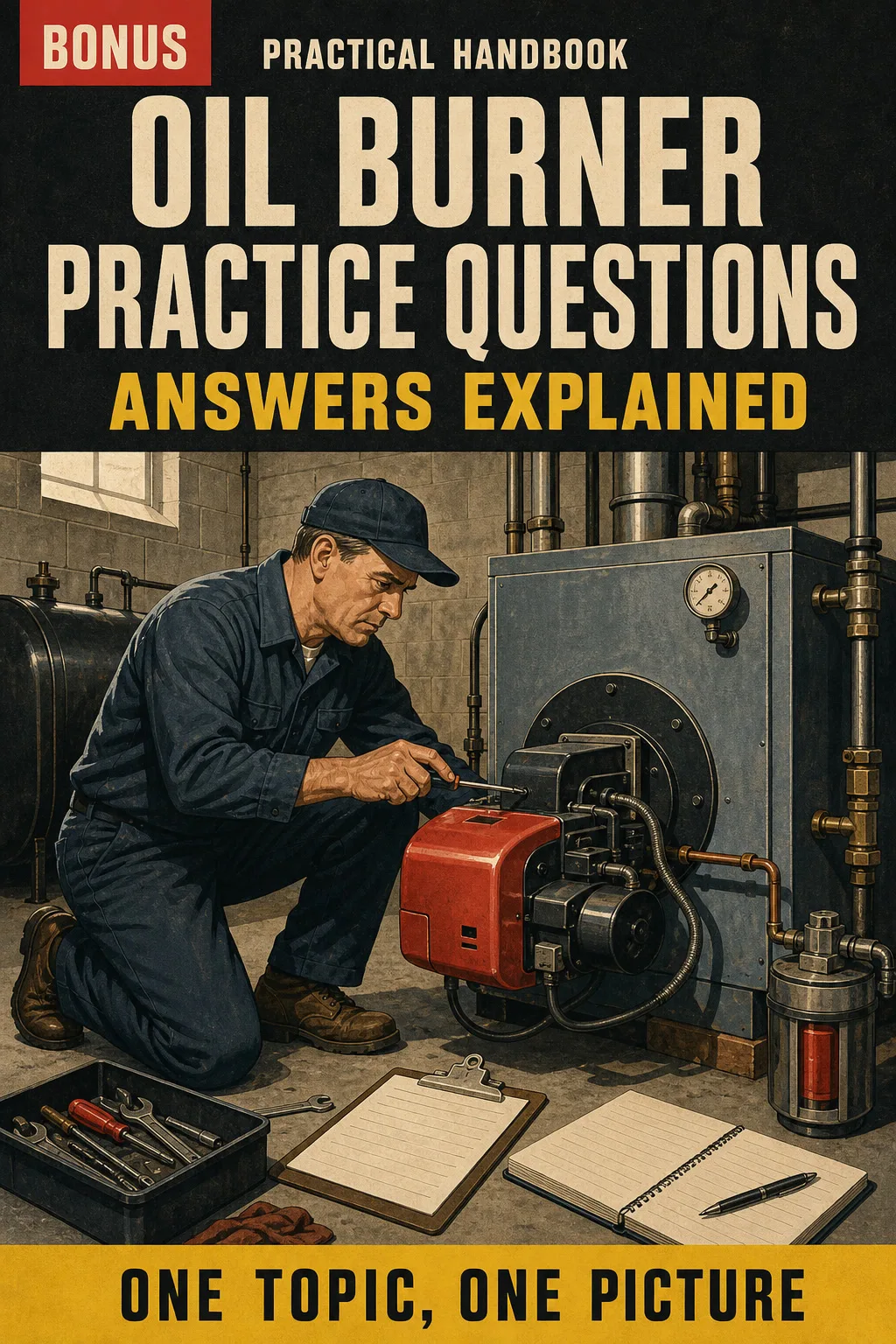
Oil Burner Practice Questions: Answers Explained

BONUS 1: «Oil Burner Practice Questions: Answers Explained»

Value on its own: US$ 17.90

Exam-style questions on burners, controls, nozzles and combustion readings, each answer explained with the page to review, so you find your weak spots before exam day.

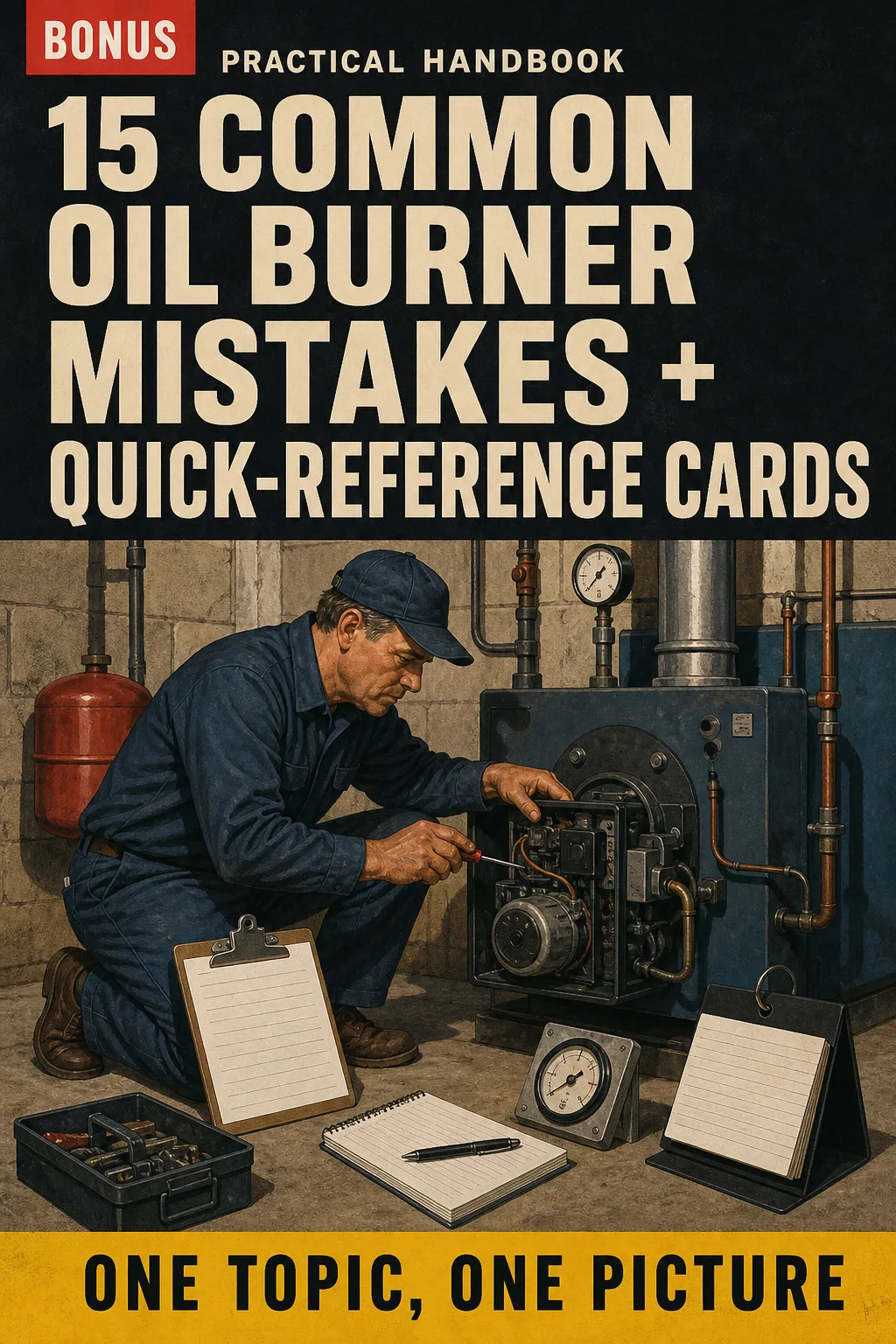
15 Common Oil Burner Mistakes + Quick-Reference Cards

BONUS 2: «15 Common Oil Burner Mistakes + Quick-Reference Cards»

Value on its own: US$ 14.90

The most frequent errors drawn before and after (electrode gaps, wrong nozzle, skipped vacuum test) plus one-page cards with the key numbers to print and keep in the truck.

Oil Burner Technician Illustrated with 2 Free Books

  • Oil Burner Technician Illustrated: 70 illustrated pagesUS$ 63
  • BONUS 1: Oil Burner Practice Questions: Answers ExplainedUS$ 17.90
  • BONUS 2: 15 Common Oil Burner Mistakes + Quick-Reference CardsUS$ 14.90
  • High-resolution PDF to printIncluded
Total value US$ 95.80
YOUR PRICE:
US$ 27
You save US$ 68.80
YES, I WANT OIL BURNER TECHNICIAN ILLUSTRATED FOR US$ 27

📄 This is a digital PDF book sent to your email: nothing is printed or shipped.

Secure purchaseEncrypted payment30-day guarantee

PDF by email: We email you Oil Burner Technician Illustrated as a PDF, together with the two free books. It's a single payment: no installments, no extra charges.

Who This Book Is For

You're studying for the license

You're studying for the license

You see the whole system as one path, tank to chimney, and every part has its own drawing. What you do with your hands finally lines up with what the manual says.

Your exam date is close

Your exam date is close

The numbers to know by heart, the worked combustion examples and the night-before review map put the key values in one place to go over in the evenings.

You already work on oil burners

You already work on oil burners

The 8-step no-heat method and the cad cell, pump and draft pages are there to check before a service call. Print them and keep them in the truck.

Everything You Get Today

US$ 95.80US$ 27
YES, I WANT OIL BURNER TECHNICIAN ILLUSTRATED FOR US$ 27

📄 This is a digital PDF book sent to your email: nothing is printed or shipped.

30DAYS
GUARANTEE

30-Day Guarantee

Try Oil Burner Technician Illustrated for 30 days, bonus books included.

We refund everything if the file won't open, if the book isn't what you see here, if you were charged twice or if the email doesn't arrive. Just email us.

You pay once. No subscriptions.

Frequently Asked Questions

Is it for me if I already work on oil burners and just need the license?

Yes. It doesn't treat you like a beginner: it takes the work you already do and puts it in order, tank to chimney, with the numbers and the troubleshooting steps the exam asks about.

Does it work for my state's license exam?

Oil burner licenses are issued by each state (and in some places by the city), and each exam has its own rules. The book covers what they share, built on NFPA 31, the NORA technician curriculum and manufacturer specs, with Massachusetts 527 CMR 4.00, Maine Fuel Board and Connecticut DCP rules as examples. Always check values against the current official version for your state and the equipment manual.

Is this official material?

No. It's an independent illustrated study book. It isn't published or endorsed by NFPA, NORA or any state board.

Does it replace a course or training?

No. It's a study and review book to use alongside your training, your field hours and your state's requirements. It doesn't give you a certificate, a license or CEU credit.

Are the practice questions the real exam questions?

No. They're written for this book in exam style, so you can find your weak spots. They aren't official questions from any exam.

When and how do I get it?

The book and the 2 bonus books come as PDFs by email, sent to the address you enter at checkout.

Do I have to pay every month?

No. It's a one-time payment. No subscription.

Can I have it on paper?

Yes. It's a PDF you can print at home or at a print shop and keep in the truck.

How does the refund work?

You have 30 days. We refund everything if the file won't open, if the book isn't what you see on this page, if you were charged twice or if the email doesn't arrive: just email us.

Before You Close This Page

No more rereading and retaining nothing.

The cad cell, the nozzle and the draft: you see them drawn, and that's it.

You walk into the exam knowing where every part goes.

Drawings make studying faster.

The book is right below.

One-time payment: US$ 27 · Guarantee: 30 days · PDF by email

YES, I WANT OIL BURNER TECHNICIAN ILLUSTRATED FOR US$ 27

📄 This is a digital PDF book sent to your email: nothing is printed or shipped.